
Emotional Intelligence at the Workplace: Why It Matters
In today’s workplace, emotional intelligence has become one of the most important soft skills. While technical skills and qualifications remain valuable, the ability to understand and manage emotions often makes the difference between a good employee and a great one. As a result, professionals with strong emotional intelligence build better relationships, adapt faster to change, and contribute to healthier work environments.
What is Emotional Intelligence?
Emotional intelligence (often called EQ) refers to the ability to recognize, understand, 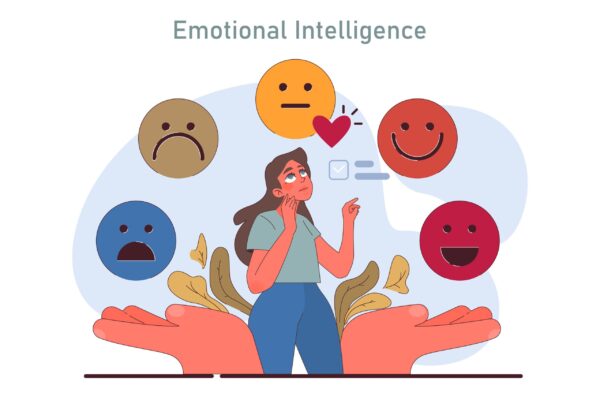
and manage your own emotions while also being aware of others’ feelings.
In other words, it combines self-awareness, empathy, and communication
skills. Therefore, emotional intelligence plays a major role in how individuals
interact, solve problems, and lead teams.
The Benefits of Emotional Intelligence in the Workplace
1. Stronger Leadership
Effective leaders need more than authority. With emotional intelligence, they can inspire trust, motivate employees, and guide teams with empathy. Leaders who show understanding and fairness are more likely to earn respect and loyalty.
2. Better Teamwork
Teamwork depends on cooperation, trust, and respect. Consequently, emotional intelligence allows employees to communicate clearly, resolve misunderstandings, and support colleagues. As a result, teams with high EQ often outperform those with low EQ.
3. Improved Communication
Communication goes beyond words. Indeed, emotional intelligence helps people pick up on tone, body language, and emotions, making conversations more effective. This means fewer conflicts and stronger professional relationships.
4. Higher Productivity
Stress and poor collaboration often reduce productivity. However, emotional intelligence helps employees stay calm under pressure and focus on tasks. Therefore, workplaces with emotionally intelligent staff see better efficiency and smoother operations.
5. Effective Conflict Resolution
Disagreements are normal at work. Yet, emotional intelligence gives employees the ability to listen, understand both sides, and find fair solutions. In the end, this creates a healthier workplace culture.
6. Greater Job Satisfaction
Employees want to feel heard and valued. With emotional intelligence, managers and team leaders can create an environment where employees feel supported. As a result, job satisfaction rises, and turnover decreases.
Why Emotional Intelligence is Crucial for Employers
Employers are increasingly prioritizing emotional intelligence when hiring. According to Emotional Intelligence in the Workplace, companies that emphasize EQ enjoy better teamwork, stronger leadership, and higher employee engagement. Furthermore, emotionally intelligent employees are more adaptable in industries facing constant change.
For example, customer service roles demand patience and empathy. Without emotional intelligence, staff may struggle to handle complaints. On the other hand, employees with high EQ can turn negative experiences into positive outcomes.
How to Develop Emotional Intelligence at Work
The good news is that emotional intelligence can be learned and improved over time. Here are five ways to strengthen EQ in the workplace:
-
Practice Self-Awareness
Take time to reflect on your emotions and how they affect your behavior. For instance, noticing frustration early can help you manage it before it escalates. -
Improve Empathy
Listen actively to colleagues and clients. Moreover, put yourself in their shoes to better understand their perspectives. -
Strengthen Communication Skills
Speak clearly and respectfully. At the same time, focus on non-verbal cues such as tone and body language. -
Manage Stress Effectively
Workplace challenges are inevitable. Therefore, use techniques like deep breathing, short breaks, or mindfulness to stay calm. Moreover, joining emotional intelligence training helps employees build resilience and handle stress more effectively. -
Seek Feedback and Reflect
Ask colleagues or managers for constructive feedback. This way, you can identify blind spots and work on improving them.
Emotional Intelligence and Career Growth
Emotional intelligence is more than a workplace buzzword—it is a career booster. In fact, many promotions go to employees who demonstrate strong leadership and relationship skills rather than just technical expertise. Thus, EQ directly impacts long-term career success.
For employees, emotional intelligence opens doors to leadership roles. Meanwhile, for employers, hiring emotionally intelligent staff means creating resilient, productive, and positive workplaces.
Final Thoughts
Emotional intelligence is not just a soft skill—it is a workplace necessity. By developing EQ, professionals can build stronger relationships, improve communication, and achieve better results. For employers, investing in emotional intelligence training means better teamwork, higher productivity, and improved employee satisfaction.
In the modern workplace, emotional intelligence is the key to growth, success, and lasting impact.